If your concern goes beyond packaging structure or technical details, our managing team is ready to step in. You can speak with us directly about pricing, urgent timelines, special requirements, or unresolved issues that need higher-level project decisions.
We focus on finding practical solutions that keep your packaging project moving forward, whether that means reviewing costs, adjusting production plans, coordinating export details, or discussing long-term wholesale cooperation.
Talk to Packaging Engineer
Engineering Team
Get expert guidance on box structure, paperboard selection, dieline setup, printing, finishing, MOQ, sampling, and production details before starting your custom packaging quote.
Packaging engineering typically covers structure, materials, manufacturing process, cost efficiency, and product protection, so this wording is aligned with real branded packaging decision points.
If you sell a product, you already know the awkward truth: your box is part of the product. Customers touch it first. Couriers beat it up. Platforms judge it. Then it becomes waste in someone’s kitchen.
So when people say “make the packaging more sustainable,” they usually mean three things at once:
Use less material and ship more efficiently
Make it easier to recycle (or reuse) in real life
Keep the unboxing, protection, and branding on point
At Zhibang (Shenzhen paper packaging factory), we build custom boxes for wholesale buyers, OEM/ODM projects, retailers, cross-border eCommerce sellers, distributors, and brand teams. The fastest way to improve sustainability is to stop treating it like a “material swap” and start treating it like a system: structure + graphics + finishing + logistics + end-of-life.
Below is a practical playbook you can use on your next dieline review, sample round, or vendor audit.
Less board, less void fill, better cube utilization
“Can you reduce empty space and still pass drop tests?”
DTC shipping, subscription, bundles
Source reduction priority
Mono-material & easy-to-separate parts
Fewer recycling rejects
“Any film, window, magnet, foam—can we remove or swap?”
Beauty, electronics, gift sets
Design for recycling
Recycled fiber + responsible sourcing
Lower virgin fiber demand + stronger compliance story
“What’s the recycled content option? Any chain-of-custody docs?”
Retail cartons, mailers, rigid boxes
Fiber sourcing practice
Lower ink coverage + safer ink choices
Cleaner pulping/de-inking and less chemical load
“Can we reduce solid coverage? Use simpler colors?”
Folding cartons, sleeves
Printing compatibility
Smarter adhesive/label choices
Fewer sticky contaminants
“Can we minimize tape/labels or use removable options?”
Mailers, kitting packs
Adhesive control
Minimal finishing where it matters
Less mixed materials and easier recycling
“Do we need lamination? Can we use texture/emboss instead?”
Premium gift boxes
Finishing tradeoffs
Recyclability testing mindset
Avoid “looks recyclable” traps
“Can you share test samples and failure points from production?”
Any high-volume SKU
Verification step
Clear disposal instructions
Less customer confusion
“Can we print simple recycling instructions on the box?”
Mass retail, Amazon/Walmart
Consumer guidance
Reuse/return-ready structure
Reduces one-way waste
“Can the box survive multiple cycles?”
Membership, refill, B2B
Reuse systems
LCA-style comparison (no numbers needed)
Stops misleading claims
“Compare options by weight, parts, and logistics steps.”
Complex packaging decisions
Whole-life view
Source reduction: right-sizing and lightweighting
Start here because it’s the least complicated win. When your box is oversized, everything snowballs: more board, more filler, bigger master cartons, worse pallet density, higher damage risk, and more returns.
What “right-sized” looks like in the real world:
Cut headspace so the product doesn’t rattle
Tighten tolerances around inserts and trays
Reduce unnecessary layers (double walls where you don’t need them)
Improve packout so fulfillment teams don’t add extra void fill “just in case”
If you ship direct-to-consumer, this is where corrugated mailers pull a lot of weight. A clean, right-sized shipper also helps with platform metrics (damage rate, returns, reviews). For shipping builds, check options like corrugated carton boxes used for delivery workloads: corrugated carton box with custom printing.
Design for recycling: mono-material and easy-to-separate parts
A box can be “paper-based” and still cause recycling problems if you stack on too many extras.
The usual troublemakers:
Plastic windows
Heavy lamination films
Mixed-material inserts (plastic + foam + metal)
Overbuilt magnets and hardware
When you need a premium feel, try to keep the primary structure paperboard and keep add-ons minimal or removable. If you love the “rigid + magnetic” experience, you can still improve recyclability by simplifying inserts and reducing mixed parts. Here’s a foldable rigid direction that can ship flat (less volume) and still feel upscale: eco-friendly collapsible magnetic gift boxes.
Also, keep your disposal message honest: “recyclable” isn’t the same as “recycled everywhere.” Design for the most common recovery path.
Recycled fiber and responsible sourcing: keep your story clean
Brands get burned when they make big eco claims and can’t back them up during an audit. A safer approach:
Specify recycled content where performance allows
Keep documentation tidy for procurement, platform requests, and retailer compliance
Use consistent language across packaging, listings, and sell sheets
If you’re building everyday secondary packaging (folding cartons), recycled fiber often works well. For high-end rigid, you may need a balance: recycled where possible, reinforced where required.
If you’re exploring retail-ready cartons, start with packaging types like folding cartons that scale well in wholesale runs: custom folding cartons.
Printing compatibility: reduce ink coverage and keep it simple
This one surprises people. The problem usually isn’t “printing” itself. It’s how much ink you lay down and how complex the surface becomes.
Practical moves that still look premium:
Replace full-bleed solids with more white space
Use patterns, line art, or spot graphics instead of heavy blocks
Keep color builds consistent and avoid unnecessary layers
Let structure and texture do some of the branding work
A box can feel expensive with smart layout, tight registration, and clean finishing—without drowning it in ink.
If you sell beauty or skincare, you can still hit the shelf look while keeping print disciplined. See a cosmetics-style box direction here: custom paper packaging for cosmetics.
Adhesives, tape, and labels: cut the “sticky mess”
If you’ve ever had a recycling partner complain about stickies, this is why. Tape, big labels, and aggressive adhesives can turn into contamination in pulping and screening.
What to do instead:
Use less tape (better structure beats more tape)
Avoid giant label coverage when the box itself can carry the info
Prefer closures that don’t need extra adhesive steps
If you must use labels, keep them small and placed consistently
From a factory view, fewer sticky parts also means faster line speed and fewer QC headaches. That’s not just greener—it’s more stable production.
Finishing tradeoffs: lamination, foil, emboss, and spot UV
Finishes sell. But some finishes also make recycling harder, especially when they create mixed layers or heavy coatings.
Here’s a more balanced way to choose:
If you need scuff resistance, ask whether you can avoid heavy film lamination
Use emboss/deboss for tactile branding without adding extra materials
Use foil and UV with restraint—keep it targeted, not everywhere
Design the “wow” into the opening experience, not just surface effects
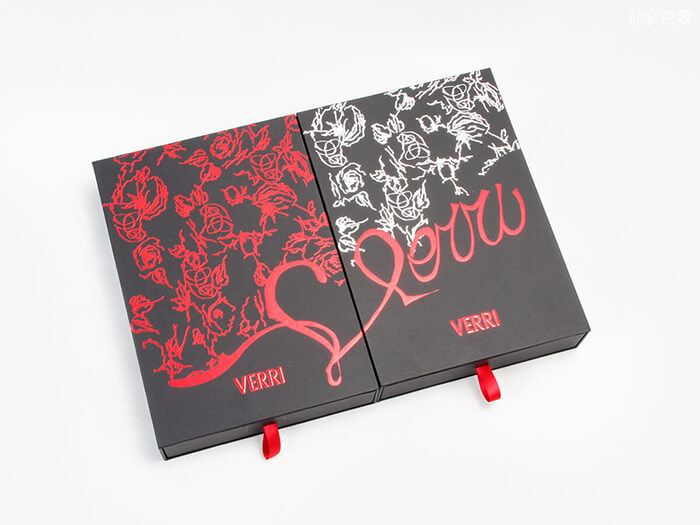
Rigid gift packaging can still look premium while staying simpler. For example, a clean drawer style can feel high-end with fewer surface layers: luxury paper drawer sliding packaging box.
Recyclability verification: don’t guess—prototype and stress-test
Sustainable design fails when teams approve artwork and structure in a vacuum. The better workflow is:
Build a sample with the real board, real print, real finish
Run packout tests (fit, scuff, rub, transit handling)
Check what parts customers will actually remove or keep
Revise the dieline before mass production
This is where a factory with tight QC helps, because you don’t want “sample quality” and “production quality” to drift apart.
If you’re scoping a project, you can start from the main catalog and narrow down structure first: Products.
Consumer disposal instructions: make it easy for real people
Most customers won’t research recycling rules. If they’re confused, they toss the whole thing in trash or contaminate recycling with the wrong parts.
Make the box do the explaining:
Print a short line like “Remove insert before recycling”
Use icons sparingly and keep them clear
Put instructions near the opening so people see them during unboxing
If the box includes a window or insert, call it out directly
This also reduces customer support tickets like “Is this recyclable?” and gives your brand a cleaner story.
Reuse and return systems: design for a second life when it fits your model
Not every brand can run a return program. But some business models can, and they get real upside: fewer one-way materials, stronger retention, and a packaging experience that customers keep.
Where reuse makes sense:
Subscription programs that ship monthly
Refill models (beauty, supplements, personal care)
B2B shipments between warehouses or franchise locations
Gift boxes meant to be kept as storage
Design tips for reuse:
Strong corners and stable hinges
Closures that survive repeated openings
Inserts that don’t tear after one pull
Surfaces that resist scuff without heavy mixed layers
Life cycle thinking: compare options across the whole journey
You don’t need a fancy report to think in “whole-life” terms. You just need to compare options without tunnel vision.
Ask these questions:
Does this design reduce shipping volume or increase it?
Will it cut damage and returns, or create more?
Does it use fewer parts, or add complexity?
Can customers recycle it without tools or guesswork?
Does it scale in mass production without extra scrap?
When brands follow this checklist, sustainability stops being a marketing fight and becomes a supply chain advantage: cleaner sourcing, smoother fulfillment, fewer breakages, and less back-and-forth with compliance teams.
Why this matters for OEM/ODM and wholesale buyers
If you buy packaging in bulk, small structural choices turn into big operational outcomes:
Better cube utilization means fewer pallets and less warehouse mess
Cleaner structures mean fewer production variables and better yield
Simpler materials reduce supplier risk and shorten sampling loops
Clearer disposal guidance reduces brand risk in new markets
That’s why Zhibang pushes sustainability into the engineering stage (dieline + spec), not the last-minute “let’s switch to kraft” stage.
If you want a faster start on a sustainable spec, use these pages to route your project: