If your concern goes beyond packaging structure or technical details, our managing team is ready to step in. You can speak with us directly about pricing, urgent timelines, special requirements, or unresolved issues that need higher-level project decisions.
We focus on finding practical solutions that keep your packaging project moving forward, whether that means reviewing costs, adjusting production plans, coordinating export details, or discussing long-term wholesale cooperation.
Talk to Packaging Engineer
Engineering Team
Get expert guidance on box structure, paperboard selection, dieline setup, printing, finishing, MOQ, sampling, and production details before starting your custom packaging quote.
Packaging engineering typically covers structure, materials, manufacturing process, cost efficiency, and product protection, so this wording is aligned with real branded packaging decision points.
Boosting Cosmetic Product Sales with Custom Packaging
Cosmetics don’t lose sales because the formula is bad. They lose sales because shoppers don’t notice, don’t trust, or don’t feel safe buying what they can’t fully judge on the spot. That’s where custom packaging earns its keep. A smart box, carton, or paper bag can pull attention on the shelf, make your brand look legit online, protect fragile items in shipping, and turn “one-time try” into repeat orders.
If you sell in bulk, run OEM/ODM, or manage multi-SKU launches, you need packaging that scales without killing consistency. That’s the whole point of working with a Shenzhen paper packaging factory like zhibang: custom boxes and printing, fast quotes, OEM/ODM support, and quality control that fits wholesale buyers and brand owners.
Packaging decisions that move sales
Sales lever
What to change in custom packaging
Common buyer pain point it fixes
zhibang reference you can share with your team
First impressions
Strong color system, clean front panel, clear product name
You don’t get a second first look. In cosmetics, you’re usually fighting three enemies at once: crowded shelves, tiny thumbnails, and shoppers who decide fast.
Here’s what works in the real world:
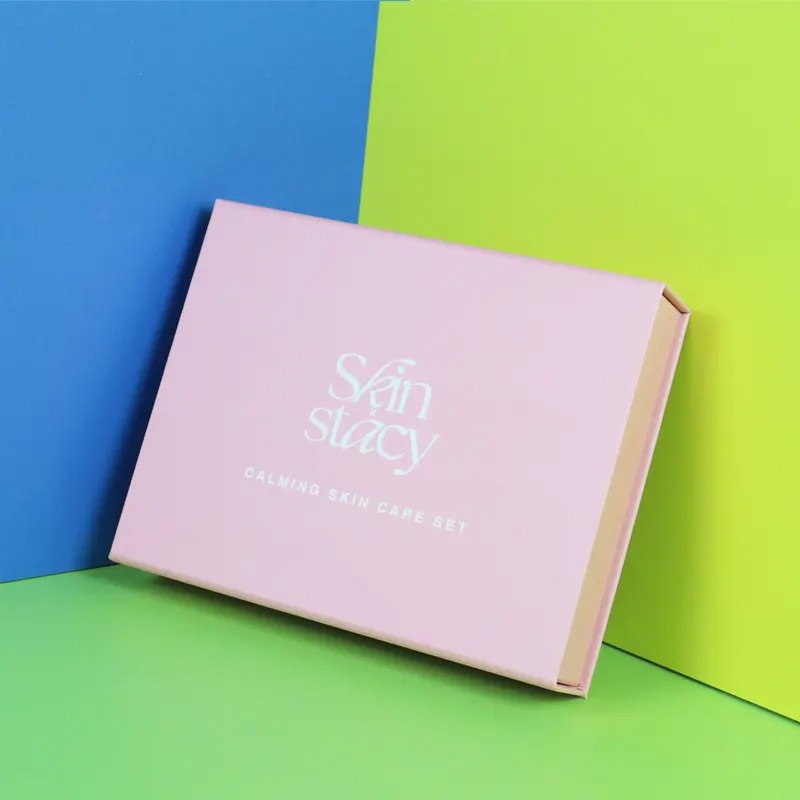
Make the front panel do one job. Put the product name, the type (serum, lipstick, palette), and one clear benefit. Don’t turn the front into a spec sheet.
Build a “3-second read.” If someone stands two steps away, can they still tell what it is?
Pick a color system you can scale. If you have multiple SKUs, give each a clear role: hero color + support color + neutral base. It keeps the line tidy.
A retailer cares about sell-through and presentation. If your box looks messy, they assume your supply chain is messy too. Tight design, stable structure, and a clear barcode zone make reorders easier.
Brand identity and consistent packaging design
Brand identity isn’t a “logo problem.” It’s a system problem. If one SKU uses matte soft-touch, another uses glossy lamination, and the third uses a random foil color, your line starts to feel like a patchwork.
To keep consistency without slowing down launches:
Lock your basics: dieline rules, safe margins, typography sizes, and where the logo sits.
Match printing language: decide early whether you use CMYK, Pantone, or a controlled blend for key brand colors.
Create a finish hierarchy: pick one “signature finish” (spot UV or hot foil or emboss). Then reuse it across the line.
If you’re building a long-term supplier relationship, it helps to know who’s making the product and how they run QC. Start here: About zhibang.
Protective packaging and damage reduction
Returns don’t just cost money. They burn reviews, wreck seller metrics, and make your ads work harder. Cosmetics have extra risk because of glass, oil leakage, and surface scratches.
Protective packaging doesn’t mean “add more filler.” It means engineer the fit:
Use inserts that match the product geometry. EVA or foam holders keep bottles and jars from rattling.
Choose the right structure. Rigid set-up boxes often protect better than thin cartons for premium skincare and gift sets.
Control the opening. A good closure prevents accidental opening during shipping and keeps the unboxing clean.
If you ship internationally, you need fewer “weak points”: no flimsy corners, no loose inserts, no easy-crush surfaces. Tight tolerances and repeatable QC matter more than fancy extras.
Differentiation with structure and finishing
In cosmetics, everybody claims “premium.” The box has to prove it.
The easiest way to stand out without turning the project into chaos is to combine one structural feature with one finish feature:
Structural: magnetic closure, ribbon pull, drawer slide, lift-off lid
Finish: hot foil, spot UV, emboss/deboss, texture paper
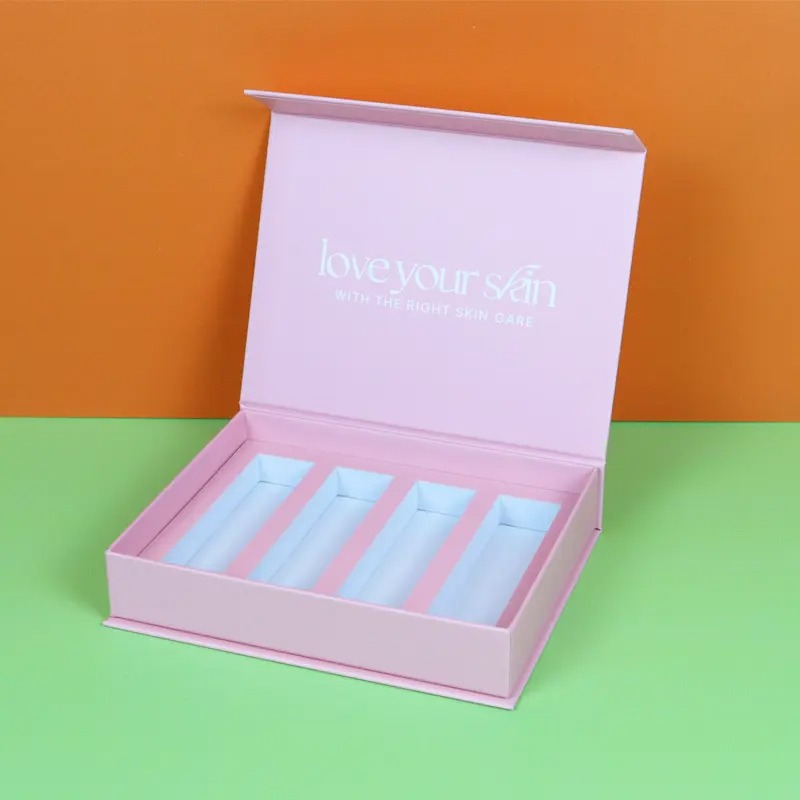
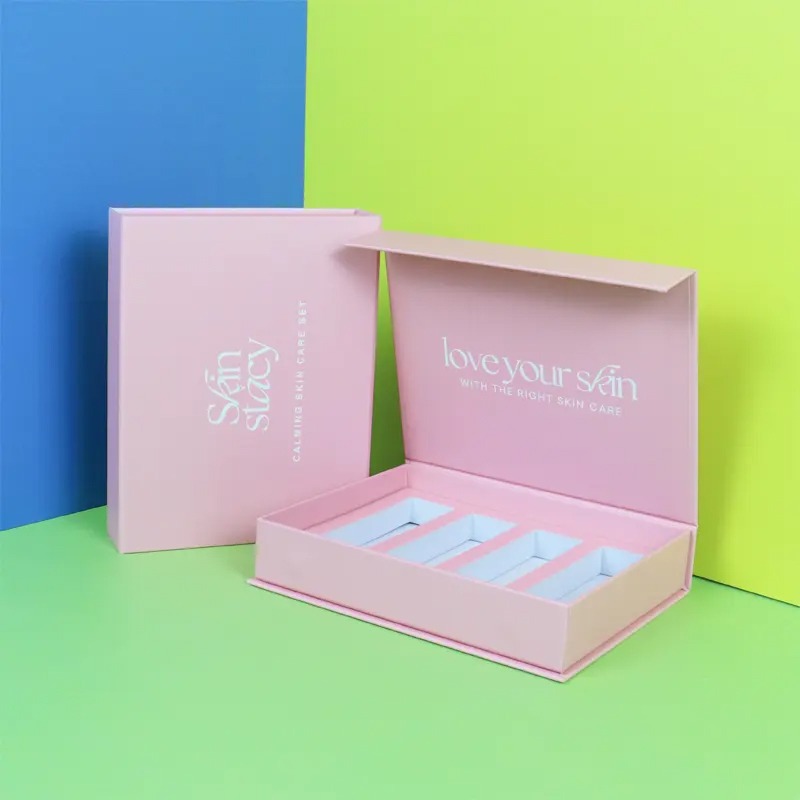
That combo gives you a “premium signal” people can feel in their hands and see on camera. For makeup sets, magnetic + ribbon is a classic because it looks good in short videos and feels giftable: folding magnetic makeup packaging box with ribbon.
Sustainable packaging and eco-friendly printing
A lot of brands talk about sustainability. Shoppers still ask one simple question: “What am I supposed to do with this after I open it?”
You can make eco-friendly moves without rewriting your whole packaging line:
Right-size the box. Less empty space reduces shipping waste and damage risk.
Choose paper-based structures where possible. Many cosmetic sets can move toward paper solutions while staying premium.
Keep finishes practical. Some finishes look great but complicate recycling. Balance the look with end-of-life reality.
If you sell to retailers, eco choices can also become a buying requirement, not just a marketing angle.
Unboxing experience and repeat purchase
Unboxing isn’t only about influencers. It’s about what happens when the customer opens the box and thinks, “Okay, this brand knows what it’s doing.”
Simple ways to increase that feeling:
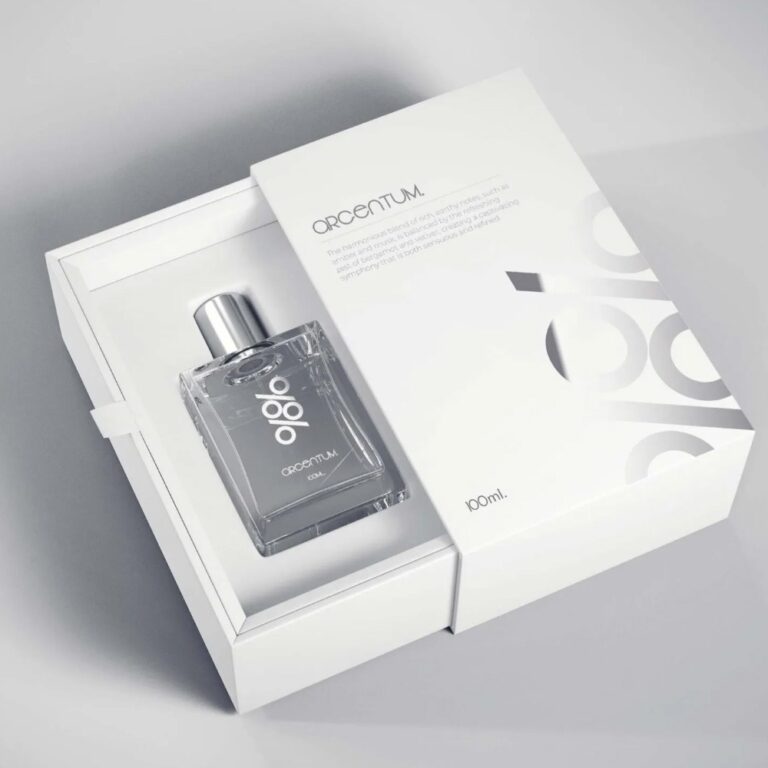
Control the reveal. A drawer box or magnetic flip lid creates a clean “open moment.”
Add a brand touch that doesn’t clutter. A short inside message, a care card, or a reorder reminder works well.
Make it easy to gift. Many customers buy skincare and fragrance as gifts even when you didn’t target gifting.
Packaging only works when it matches who buys it and where they buy it.
Brand owners and manufacturers: need consistent packaging across SKUs, stable color output, and supplier discipline.
Amazon and platform sellers: need shipping-safe structure, clean labeling zones, and low defect rates.
Wholesalers and distributors: need bulk-ready cartons, repeatable specs, and fast reorder cycles.
Design agencies: need dieline accuracy, proofing speed, and a factory that can execute details.
If your product sells in physical retail, don’t forget the “carry-out moment.” A good bag makes the purchase look valuable in public, which helps brand perception: cosmetic paper gift bags with silk handle.
Compliance labeling and information hierarchy
Cosmetic rules vary by market, so you should always check your target country’s requirements. Still, the packaging layout best practices stay consistent:
Keep mandatory info readable. Don’t shrink it until it looks like a legal trick.
Reserve a clean zone for barcode + batch code. This helps warehouses, retailers, and customer support.
Don’t bury warnings. If a product needs caution text, place it where users can actually find it.
When you design for compliance early, you avoid last-minute artwork changes that delay production.
OEM/ODM custom packaging and bulk wholesale execution
Custom packaging sounds fun until you hit production reality: multiple SKUs, tight timelines, and buyers who won’t accept variation.
This is where a Shenzhen paper packaging factory setup matters. You want:
OEM/ODM support so your packaging aligns with how you manufacture and fulfill.
Bulk and wholesale workflow that keeps specs consistent between reorders.
Quality control that catches color drift, glue issues, and surface defects before they reach your customers.
If you want to browse options fast, start with the catalog: Products. When you’re ready to push a project forward, go straight to the next step: Contact zhibang.
Custom packaging checklist for cosmetics packaging
Confirm your channel (retail, DTC, Amazon, wholesale) before locking structure
Define SKU system (color rules, naming rules, finish rules)
Choose box type based on product risk (glass, oil, fragile edges)
Specify insert and fit (EVA/foam/holder) for stability
Keep labeling zones clean for barcode and batch code
Build for repeat orders with consistent specs and QC
If you want the fastest path, use the site as your reference hub: zhibang homepage.