If your concern goes beyond packaging structure or technical details, our managing team is ready to step in. You can speak with us directly about pricing, urgent timelines, special requirements, or unresolved issues that need higher-level project decisions.
We focus on finding practical solutions that keep your packaging project moving forward, whether that means reviewing costs, adjusting production plans, coordinating export details, or discussing long-term wholesale cooperation.
Talk to Packaging Engineer
Engineering Team
Get expert guidance on box structure, paperboard selection, dieline setup, printing, finishing, MOQ, sampling, and production details before starting your custom packaging quote.
Packaging engineering typically covers structure, materials, manufacturing process, cost efficiency, and product protection, so this wording is aligned with real branded packaging decision points.
Full-Process Guide for Customized Packaging Boxes: Five Core Strategies From Design To Delivery
Ordering custom packaging boxes looks simple from the outside.
Send dimensions. Upload artwork. Pick a material. Approve a sample. Place an order.
That is how many projects begin.
It is also how expensive problems begin.
A professional custom packaging process is really a chain of controlled decisions. Each decision removes uncertainty before the next, more expensive stage begins. The objective is not simply to make a box that looks good. The box has to protect the product, run through production consistently, meet brand requirements, survive distribution, arrive on schedule, and still make commercial sense at the required quantity.
For procurement managers, packaging engineers, product managers, and brand teams, the safest approach is to treat packaging development as an engineering and supply-chain project rather than an artwork project.
Here are the five strategies we use to move a packaging project from concept to delivery with fewer surprises.
Inspection points, tolerances, AQL or defect rules, testing, photo records
Problems discovered after production
5. Delivery Planning
When must goods actually arrive?
Production window, packing, master cartons, shipment mode, buffer, receiving date
Boxes finish on time but launch is still late
The sequence matters.
Changing a dieline during structural design costs very little.
Changing it after tooling has been produced costs more.
Changing it after 20,000 printed sheets have been converted into finished boxes becomes a completely different conversation.
Strategy 1: Lock the Specification Before Custom Packaging Design Gets Expensive
The first mistake in custom packaging sourcing often happens before a factory prints anything.
The brief is incomplete.
A buyer might send:
“We need a luxury rigid box, matte black, gold logo, around 20,000 pieces.”
That is enough for a rough conversation. It is not enough for production.
Professional custom packaging design should translate a marketing idea into measurable manufacturing requirements: product dimensions, product weight, board grade, box structure, insert geometry, opening method, artwork zones, production tolerances, pack-out requirements, shipping conditions, and the desired customer experience.
A useful packaging specification should answer questions such as:
What are the exact product dimensions and dimensional tolerances?
How heavy is the product?
Is it fragile?
Must the insert prevent movement or simply present the product?
Does the package ship directly to consumers or inside another shipping carton?
Is it displayed on a retail shelf?
Does it need tamper evidence?
Does it need food-contact, sustainability, recycling, labeling, or market-specific documentation?
What surface appearance does the brand expect?
Is an exact Pantone color required?
Which finishes are mandatory and which are optional?
What defects would cause rejection?
How many finished boxes must fit inside one master carton?
How much storage space does the buyer have?
What is the required arrival date?
That sounds detailed because it needs to be.
Start with the product, not the box
We often see buyers begin with the packaging style they like.
That is backwards.
Start with the product.
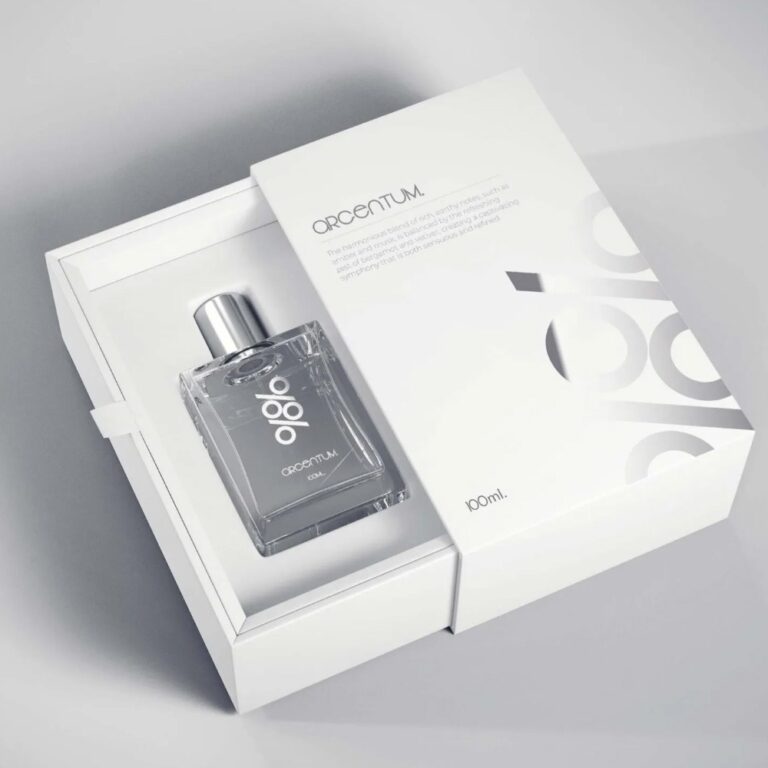
Take a perfume bottle as an example. A tall glass bottle with a heavy cap creates different packaging requirements from a lightweight skincare tube, even if both brands want the same magnetic rigid box.
The bottle’s center of gravity matters.
Its fragility matters.
The clearance between the bottle and insert matters.
The distance between the product and box wall matters.
The way the customer removes the bottle matters.
A package is a system.
Sustainability also belongs in the specification stage
“Sustainable packaging” sounds like one requirement.
It isn’t.
Should the priority be:
lower material use,
recycled content,
recyclability,
renewable fibers,
reduced plastic,
compostability,
lower transport weight,
easier material separation,
or longer product shelf life?
Those objectives can conflict.
McKinsey’s September 2025 research into packaging purchasers reported that some newer materials, including high-performing PHA and home-compostable flexible films, could cost four to five times more than conventional polyolefin, depending on barrier and specification requirements. McKinsey estimated that the difference could raise the final packaged-product price by roughly 2% to 5%.
That is not an argument against sustainable materials.
It is an argument for specification discipline.
A sustainable packaging choice must survive the same questions as any other material:
Will it protect the product? Can it be produced consistently? Can the supply chain support the required volume? Will customers value it enough to justify the cost?
There is no universal “best sustainable box”
Market context changes the answer.
McKinsey’s 2025 Global Packaging Survey included 11,136 respondents across 11 countries. The share willing to pay more for sustainable packaging ranged from roughly 40% in Japan to 85% in India, while 39% of global respondents rated environmental impact as extremely or very important when evaluating products.
Those differences matter.
A US cosmetics brand, German premium-food company, and Japanese electronics brand should not automatically receive the same packaging recommendation.
Their balance between appearance, cost, recyclability, convenience, protection, sustainability, and shelf life may be completely different.
The right specification follows the market. Not the slogan.
Strategy 2: Prototype Structure Before Approving Decoration
This is where I see buyers save a few hundred dollars and accidentally put tens of thousands at risk.
A 3D rendering looks good.
The logo is centered.
The foil looks expensive.
Everyone approves it.
But nobody has inserted the real product into a physical box.
Not every packaging sample serves the same purpose.
A sensible approval path might look like this:
3D rendering → plain structural sample → digital printed sample → production-representative sample → mass production
Each answers a different question.
A plain sample answers structural questions
Before worrying about color, ask:
Does the product actually fit?
Is there enough clearance?
Does the insert hold it securely?
Can assembly workers load the product efficiently?
Does the lid close correctly?
Is the opening force acceptable?
Does the box bulge?
Does the insert collapse?
Can the customer remove the product without fighting the packaging?
This stage is cheap.
Use it.
A digital sample answers visual questions
Digital samples are useful for checking:
artwork scale,
copy,
typography,
panel positioning,
barcode placement,
logo size,
overall color direction,
visual hierarchy.
But digital printing does not automatically reproduce the final offset-printing result.
Nor does a handmade prototype necessarily reproduce automated production.
That distinction is where problems start.
The sample that taught an expensive lesson
Recently, I came across a case in an industry discussion that perfectly illustrated this.
A buyer collected samples from several packaging manufacturers, selected the sample he liked, and placed the bulk order.
When the finished boxes arrived, the colors were visibly darker.
Worse, even the paper felt different.
The supplier’s explanation was uncomfortable but technically understandable: the buyer had never requested a true pre-production sample produced under conditions representative of mass production. The sampling method and the production printing process were different.
Now the buyer had a problem.
The boxes were already made.
The launch date was approaching.
There was not enough time—or budget—for a complete reprint.
That situation is one reason we prefer to lock the substrate, print method, Pantone or color reference, dieline, finishes, insert structure, tooling expectations, and tolerances before production release.
A sample that does not represent the intended production method is not really a production standard.
It is a visual reference.
Those are not the same thing.
Here is the unpopular part
A beautiful packaging sample can be nearly worthless as a mass-production approval if it was produced using different materials, printing processes, finishing methods, tooling, or construction techniques.
Buyers sometimes spend three weeks debating whether gold foil should be slightly warmer while questioning the cost of a production-grade prototype.
The priority should usually be reversed.
Validate the structure.
Validate product fit.
Validate materials.
Validate the production process.
Then argue about the exact shade of gold.
Paying more for a representative prototype may hurt for a moment.
Approving 30,000 custom packaging boxes from a rendering, digital proof, or handmade mock-up can hurt much longer.
Strategy 3: Convert the Approved Sample Into a Production Specification
A sample is physical evidence.
It is not complete manufacturing documentation.
Before mass production begins, the approved package needs to be translated into a controlled production specification.
A practical control plan can include incoming-material verification, first-article approval, printing checks, converting inspections, assembly checks, packing verification, and pre-shipment inspection. Zhibang Pack’s current quality-management documentation also describes material checks, first-article approval, in-process audits, pre-shipment inspection, artwork controls, and inspection records as part of that workflow.
Gate 1: Incoming materials
Confirm the substrate before value is added.
Check items such as:
material type,
thickness,
GSM,
board stiffness,
paper shade,
surface condition,
certificate requirements,
supplier lot.
A material substitution should never happen silently.
“Equivalent paper” may not be equivalent once it is printed, laminated, folded, or displayed under retail lighting.
Gate 2: First-article approval
Inspect the first finished pieces before full-speed production.
This is one of the highest-value checkpoints in the entire process.
Confirm:
dimensions,
artwork revision,
print registration,
color,
die cutting,
creasing,
foil placement,
embossing,
laminating,
glue position,
insert fit,
closure behavior.
If something is wrong, production can still be stopped.
Gate 3: In-process inspection
Production drift happens.
Color changes.
Paper behaves differently.
Foil registration moves.
Glue application changes.
Operators change shifts.
Tooling wears.
A good factory checks the process while it is running rather than assuming the first approved piece guarantees the final carton will be identical.
Gate 4: Finished-product inspection
Now check the fully assembled box.
Common defects may include:
scratches,
glue marks,
crushed corners,
warped lids,
poor wrapping,
color variation,
foil misregistration,
bubbles under lamination,
exposed greyboard,
dirty surfaces,
loose magnets,
misaligned inserts,
incorrect dimensions.
But buyers need another layer: severity definitions.
Is a 0.5 mm foil shift acceptable?
What about 1 mm?
Is a tiny glue mark inside the box acceptable?
Is it unacceptable on the front panel?
Without acceptance criteria, the supplier and buyer can inspect exactly the same box and reach different conclusions.
Gate 5: Packing and pre-shipment verification
Perfect retail boxes packed badly can still arrive damaged.
Check:
master-carton dimensions,
quantity per carton,
protective wrapping,
corner protection,
carton strength,
moisture protection where needed,
labels,
shipping marks,
pallet configuration,
pallet height,
carton count.
Export packaging must survive logistics, not just the factory floor.
Strategy 5: Manage Custom Packaging Lead Time Backward From the Delivery Date
When buyers ask, “What’s your lead time?” they often expect one number.
Twenty days.
Thirty days.
Forty days.
That number can be misleading.
The commercial question is not:
How many days does manufacturing take?
The real question is:
What has to happen between today and the date these boxes must be available at my warehouse, co-packer, fulfillment center, or production line?
That is your real project schedule.
Packaging lead time is a chain
A typical project can include:
RFQ clarification
Structural engineering
Dieline approval
Prototype production
Sample shipment
Buyer review
Revision
Second sample
Final approval
Material purchasing
Prepress
Printing
Lamination or coating
Foil stamping
Embossing/debossing
Die cutting
Gluing or hand assembly
QC
Packing
Export documentation
Freight
Customs clearance
Final delivery
Every extra process adds another dependency.
If your packaging uses multiple print and finishing operations, custom packaging lead time should be planned around the actual process route. Foil, embossing, spot UV, lamination, die cutting, and other post-press operations do not all happen simultaneously; each can create another production and QC checkpoint.
Work backward, not forward
Suppose your products must enter a fulfillment center on October 15.
Do not tell your packaging supplier:
“Please start production in September.”
Instead, work backward:
October 15: Packaging required at fulfillment center October 10: Receiving and contingency buffer Late September: Freight/customs window Mid-September: Goods packed and released Early September: Production completed Late August: Material and production slot confirmed Mid-August: Production sample approved Early August: Prototype revisions complete Late July: Engineering starts
Now you have a schedule.
Approval time is part of lead time
This is frequently forgotten.
A supplier may produce a sample in five days.
Then the sample sits in the buyer’s office for nine days waiting for marketing, purchasing, compliance, and the founder to approve it.
The project has not experienced a five-day sample cycle.
It has experienced a fourteen-day cycle.
If five departments need approval, assign the approval owner before sampling begins.
A rigid gift box with offset printing, matte lamination, foil stamping, embossing, custom insert fabrication, magnet placement, and hand assembly has more failure points than a one-color folding carton.
Each process can create:
queue time,
setup time,
inspection time,
rework risk.
This does not mean you should avoid premium finishing.
Just build reality into the schedule.
Why Sustainability Must Be Evaluated Across the Entire Process
Packaging sustainability is sometimes treated as a material-selection exercise.
Choose recycled paper.
Done.
Real sustainability decisions are broader.
Material usage, conversion efficiency, packaging dimensions, product protection, transport cube, recyclability, mixed-material construction, coatings, inserts, and product-damage rates can all change the result.
The scale of packaging waste makes these decisions commercially relevant as well as environmental.
Eurostat reported that the EU generated 79.7 million tonnes of packaging waste in 2023, equivalent to 177.8 kg per person. Paper and cardboard accounted for 40.4%, making them the largest packaging-waste category, while plastic represented 19.8%.
Eurostat also reported 35.3 kg of plastic packaging waste per EU resident, with 14.8 kg recycled. The plastic-packaging recycling rate reached 42.1% in 2023.
So reducing packaging waste matters.
But replacing one material with another without considering performance can create a false win.
If a thinner package causes product breakage, replacements, reshipping, or retail returns, the total system may become worse.
Right-size first.
Remove unnecessary material.
Engineer the structure.
Then evaluate the sustainability path against the real product, real market, and real distribution system.
The Approval Checklist I Would Use Before Releasing Mass Production
Before signing a purchase order or approving mass production, I would want clear answers to all of these:
Structure
Is the final dieline approved?
Has the actual product been tested inside the box?
Are insert dimensions approved?
Are closure and opening behavior acceptable?
Are dimensional tolerances documented?
Materials
Is the exact substrate specified?
Is board thickness documented?
Are recycled-content or FSC requirements stated?
Are substitutions prohibited without written approval?
Printing
Is the artwork revision locked?
Are Pantone references defined?
Has the buyer approved the appropriate color proof?
Are barcodes and mandatory copy checked?
Finishing
Is the foil reference approved?
Are UV, emboss, deboss, coating, and lamination zones documented?
Is finish registration tolerance defined?
Sampling
Has a structural prototype been tested?
Has the buyer confirmed whether the final sample is handmade, digitally printed, or production-representative?
Does the approved sample use the intended production materials and processes?
Is a signed or retained golden sample available?
Quality
Are inspection standards agreed?
Are tolerances defined?
Are major and minor defects defined?
Will first-article approval be performed?
Will in-process inspection occur?
Is pre-shipment inspection required?
Logistics
Is master-carton packing approved?
Is carton quantity confirmed?
Is palletization confirmed?
Is freight mode confirmed?
Is the final warehouse delivery date—not only factory completion date—documented?
If several of those answers are “not sure,” the project is not ready for mass production.
Even if the artwork looks fantastic.
What a Good Custom Packaging Supplier Should Ask You
There is a simple way to learn something about a packaging supplier before placing an order.
Pay attention to the questions they ask.
If the conversation is only:
Quantity? Size? Artwork? Shipping address?
You may receive a fast quote.
You have not necessarily received much engineering.
A stronger supplier conversation should touch on:
actual product dimensions,
weight,
fragility,
sales channel,
fulfillment method,
target market,
current packaging problems,
substrate expectations,
sustainability requirements,
printing standards,
finishing,
inspection standards,
required delivery date.
Good questions slow the quotation down slightly.
They can speed the project up dramatically.
Because a cheap quote based on the wrong specification is not a cheap quote.
It is just an incomplete one.
The Real Objective: Make Mass Production Boring
This may sound strange coming from a packaging manufacturer, but mass production should not be exciting.
Excitement belongs in design.
Production should be predictable.
The structure has been tested.
The materials have been locked.
The artwork is frozen.
The production sample has been approved.
The QC standard is documented.
The packing method is agreed.
The delivery plan is clear.
Then the factory repeats the approved result thousands of times.
That is the real purpose of a disciplined custom packaging process.
Not more paperwork.
Not more meetings.
Fewer surprises.
And in custom manufacturing, fewer surprises usually mean fewer delays, fewer arguments, less rework, and far better control of landed cost.
FAQs
What is the custom packaging process?
The custom packaging process moves a package from requirements and structural design through prototyping, production approval, manufacturing, quality control, packing, and delivery.
Each stage should have a clear approval gate. Buyers reduce risk by locking technical requirements before committing money to tooling, printing, finishing, or mass production.
How do I start an order for custom packaging boxes?
Start with the product specifications, quantity, target market, packaging dimensions, desired structure, material preference, artwork status, shipping method, and required delivery date.
If the structure has not been developed yet, send the actual product dimensions and performance requirements first. A packaging engineer can then recommend structures and build the dieline.
Do I need a prototype before mass production?
For genuinely customized packaging, physical prototyping is strongly recommended before mass production.
At minimum, validate the structure and product fit. For higher-risk projects, use a production-representative sample that confirms the intended substrate, printing method, coatings, foil, embossing, assembly, and other important finishes.
What is the difference between a digital sample and a production sample?
A digital sample mainly validates artwork and appearance; a production sample is intended to represent the materials and processes used in the final production run.
Digital samples are faster and useful for visual approval. They should not automatically become the color or material standard for another printing process.
What should be approved before custom box manufacturing begins?
Approve the dieline, dimensions, material, artwork revision, color references, printing process, finishes, insert, tolerances, packing method, QC requirements, and representative sample.
The more subjective language you can replace with measurable specifications, the lower the risk of disputes later.
Why can mass-produced packaging look different from the sample?
Differences can result from substrates, printing methods, inks, coatings, machines, tooling, handmade sampling techniques, and normal process variation.
Ask what process produced the sample. If color, material feel, or finish is commercially sensitive, approve a sample that closely represents the intended production route.
How should packaging quality control be handled?
Quality control should include incoming-material checks, first-article approval, in-process inspection, finished-product checks, packing verification, and pre-shipment release.
Do not rely only on final inspection. Catching a defect before thousands of units are converted is far cheaper than discovering it after packing.
How long does custom packaging take?
Lead time depends on design complexity, sampling rounds, materials, printing, finishing, quantity, assembly, QC, freight mode, and buyer approval speed.
Ask for a milestone schedule rather than one production number. Plan backward from the date packaging must arrive at your warehouse or filling line.
Can sustainable packaging cost more?
Yes. Some sustainable materials can carry meaningful cost premiums, especially when performance or supply requirements are demanding.
Evaluate sustainability together with protection, recyclability, availability, target-market expectations, shipping efficiency, and unit economics rather than selecting a substrate from its environmental claim alone.
Is recycled packaging always more sustainable?
No single packaging material is best across every sustainability metric or application.
Recycled content can be valuable, but buyers should also evaluate material usage, recyclability, sourcing, transport efficiency, product protection, mixed materials, coatings, supply consistency, and the consequences of product damage.
What is the biggest mistake buyers make when ordering custom packaging?
Approving an attractive sample without defining exactly what mass production must reproduce is one of the highest-risk mistakes.
Lock the material, print method, finishes, dieline, tolerances, artwork revision, insert construction, quality standard, and production-representative approval before releasing the bulk order.