If your concern goes beyond packaging structure or technical details, our managing team is ready to step in. You can speak with us directly about pricing, urgent timelines, special requirements, or unresolved issues that need higher-level project decisions.
We focus on finding practical solutions that keep your packaging project moving forward, whether that means reviewing costs, adjusting production plans, coordinating export details, or discussing long-term wholesale cooperation.
Talk to Packaging Engineer
Engineering Team
Get expert guidance on box structure, paperboard selection, dieline setup, printing, finishing, MOQ, sampling, and production details before starting your custom packaging quote.
Packaging engineering typically covers structure, materials, manufacturing process, cost efficiency, and product protection, so this wording is aligned with real branded packaging decision points.
Five Dimensions Of Creative Packaging To Solve Product Competitiveness
Packaging development meetings often start with the wrong question.
“How can we make this box look more premium?”
That sounds reasonable. It is also incomplete.
For a marketing team, packaging may first appear to be a branding surface. For a packaging engineer, it is a physical system. Procurement sees material cost and supplier capacity. Operations sees packing speed. Logistics sees cube utilization and damage rates. Regulatory teams see claims, labeling, recyclability, and market-access risk.
The customer sees all of it at once.
That is why creative packaging design should not be treated as a competition to add more foil, more layers, a stranger opening mechanism, or a more expensive insert. Creativity creates product competitiveness only when it solves a real commercial or user problem.
A stronger way to think about innovative packaging design is this:
A packaging concept is competitive when it makes the product easier to notice, safer to buy, better to use, more efficient to manufacture and ship, and easier to keep compliant—without adding cost or complexity that the market will not reward.
That changes the design brief considerably.
Instead of asking whether the packaging looks creative, ask whether it performs across five dimensions.
The five dimensions of competitive creative packaging
Dimension
What it needs to achieve
Typical failure
What buyers should measure
1. Market differentiation
Communicate brand and product value quickly
Expensive decoration with weak shelf impact
Recognition, hierarchy, brand consistency, perceived value
2. Structural performance
Protect, fit, open, close, store and transport correctly
Deformation, breakage, excessive void space
Fit tolerance, compression, drop resistance, usability
3. Commercial feasibility
Scale at an acceptable total cost
Great prototype, poor production economics
Unit cost, tooling, labor, MOQ, speed, scrap, freight
4. Sustainability & compliance
Reduce material impact while meeting market requirements
Material swap creates cost, performance or regulatory problems
Recyclability, material weight, recycled content, labeling
5. Validation & repeatability
Reproduce approved performance at mass-production scale
Sample looks perfect; production varies
Sampling, tolerances, QC standards, testing, change control
These dimensions are connected.
Change the paper thickness and you may change stiffness, print behavior, board yield, freight weight, recyclability, perceived quality, and converting speed.
Remove an insert and you may cut material cost—but increase movement and damage.
Add a magnetic closure and you may improve perceived luxury—but introduce extra materials, assembly operations, recycling concerns, and cost.
Packaging is a system. Treat it like one.
Dimension 1: Market differentiation must have a job
There is nothing wrong with wanting packaging to look different.
For many products, especially cosmetics, fragrance, consumer electronics, jewelry, gourmet foods, spirits, and premium gifts, the package is part of the product experience. It helps buyers make assumptions about quality before they ever touch the product itself.
But differentiation needs direction.
An unusual structure that does not communicate anything meaningful may simply create visual noise.
A useful packaging design strategy starts with the competitive problem before anyone chooses paper, inserts, foil colors, or opening mechanisms. Are you trying to improve shelf recognition? Raise perceived price? Explain a technical product? Make e-commerce opening easier? Reduce damage? Support a product launch? Standardize multiple SKUs?
Those are very different briefs.
Start with the three-second problem
In many retail environments, the customer is not studying your packaging. They are scanning.
Your package therefore needs a hierarchy.
What should someone understand first?
The brand?
The product category?
The key functional benefit?
The variant?
The premium positioning?
Trying to make every element shout at the same volume usually produces packaging that feels busy rather than distinctive.
Creative restraint often wins.
A strong shape, one tactile contrast, a recognizable color system, or a smart opening moment may create more memory than five premium finishes fighting for attention.
That is especially important because appearance is only one part of packaging performance.
McKinsey’s 2025 Global Packaging Survey covered 11,136 consumers across 11 countries and four continents. When respondents evaluated packaging characteristics, food safety and shelf life generally ranked at the top, while appearance ranked near the bottom. Environmental impact also ranked relatively low, although 51% of respondents still considered it extremely or very important.
That finding should make packaging teams uncomfortable in a useful way.
Consumers may appreciate a beautiful box. They still expect the box to do its basic job first.
Dimension 2: Structural design protects the value you already created
Recently, I came across a manufacturing discussion that should make any packaging buyer nervous.
A product company had specified master-carton dimensions to an overseas supplier. The factory confirmed them.
Then, before shipment, the cartons were reportedly made about seven centimeters smaller.
Why?
More units could fit into the shipping container.
On a freight spreadsheet, somebody probably thought they had found an optimization.
In the real shipment, the products were forced into undersized cartons. They were compressed during packing and arrived visibly deformed.
The product itself had been acceptable.
The packaging decision destroyed its value.
The discussion quickly shifted away from carton appearance and toward specification control, tolerances, inspection, supplier accountability, and written packaging requirements.
That is exactly where it should have gone.
A beautiful retail carton cannot compensate for bad engineering.
This is why packaging structural design should begin with the product, not the dieline. Product dimensions, weight distribution, fragility, center of gravity, accessory layout, shipping route, pallet pattern, storage conditions, retail handling, and customer opening behavior all affect what the final structure should become.
Product fit is not “close enough”
Millimeters matter.
Too much internal clearance and the product moves.
Too little clearance and the packaging can apply pressure to the product.
Poor insert geometry creates point loading.
Oversized cartons consume material and freight space.
Undersized cartons can create deformation, abrasion, closing pressure, burst seams, or stacking instability.
For a serious B2B packaging program, tolerances therefore belong in the specification.
Do not approve only:
250 × 180 × 80 mm
Also define:
dimensional tolerance,
board or paper thickness,
insert tolerance,
critical product-clearance areas,
glue position,
closure strength,
compression requirements,
acceptable visual variation,
packaging orientation,
master-carton requirements.
“Same as sample” is not a specification.
Design the opening experience without sacrificing protection
Good structural creativity can improve both usability and differentiation.
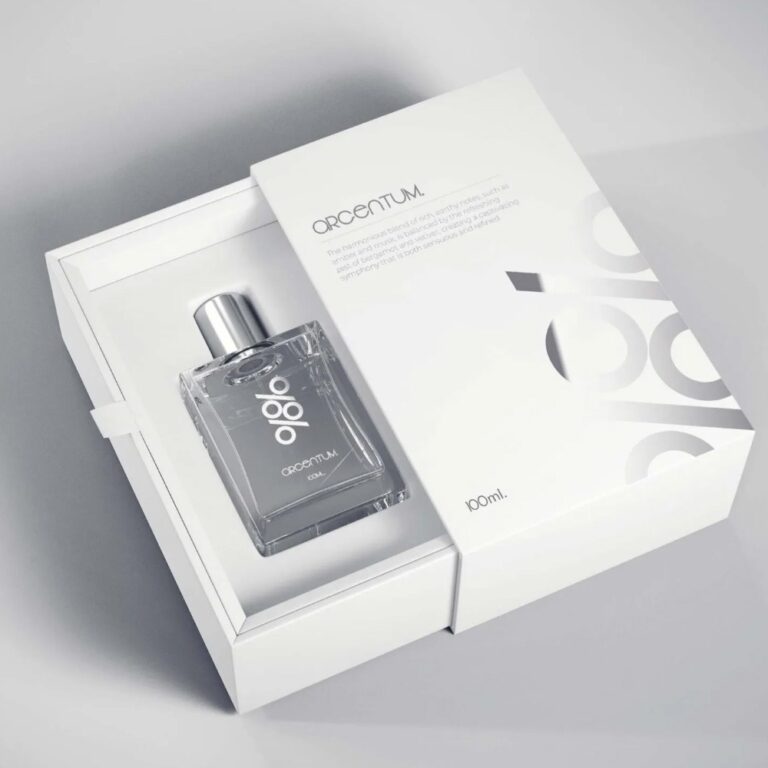
Consider a perfume presentation box.
A well-designed insert may hold the bottle securely while revealing it gradually when the lid opens. The customer experiences a premium reveal, yet the bottle remains immobilized during transport.
That is useful creativity.
Compare it with a box that uses three decorative layers, two ribbons, an oversized cavity, and an elaborate closure simply because the prototype looks impressive on camera.
That complexity needs to justify itself.
The structural question is always:
What does this feature do?
Does it:
improve protection?
improve access?
create a recognizable opening sequence?
reduce movement?
eliminate another component?
improve packing speed?
help products display correctly?
reduce material elsewhere?
If the answer is no, you may be looking at decoration rather than engineering.
Dimension 3: Commercial feasibility decides whether creativity can scale
Here is the view that often gets resistance during packaging development:
More creative packaging does not automatically make a product more competitive.
Sometimes it makes the product worse.
More expensive.
Slower to assemble.
Harder to source.
Harder to recycle.
More sensitive to tolerances.
More expensive to ship.
More likely to fail inspection.
Buyers can become attached to prototypes because prototypes hide manufacturing reality.
A sample maker can spend an hour hand-assembling one elaborate box.
That tells you almost nothing about what happens when the factory must make 80,000 pieces.
Prototype economics and production economics are different
Imagine a concept using:
specialty dyed paper,
double hot-foil stamping,
debossing,
magnetic closure,
EVA insert,
ribbon pull,
four-piece internal construction,
hand-applied decorative panel.
It may look excellent.
Now ask what happens at scale.
How many separate production processes are required?
Which operations are manual?
How much setup waste does each process create?
Can registration tolerances hold across 50,000 units?
Is the specialty material available again six months later?
Can two suppliers reproduce the same result?
How many boxes can one operator assemble per hour?
How much warehouse space does the structure consume?
Can the same design support five SKUs?
What happens to total landed cost?
Those questions separate packaging creativity from packaging theater.
Sustainable innovation can also carry a price penalty
McKinsey’s purchaser-side research is especially relevant here.
Its 2025 study of barriers facing packaging purchasers examined FMCG companies, retailers, private-label producers, co-packers, and other packaging stakeholders. Interviewees reported that some new materials—including high-performing PHA and home-compostable films—could cost roughly four to five times more than conventional polyolefin, depending on the barrier and performance specification. McKinsey estimated that this difference could increase the final packaged-product price by about 2% to 5%.
Supply can also bite.
McKinsey cited estimates suggesting that if retailers fulfilled existing sustainability pledges, demand for recycled plastics could reach around 90 million metric tons by 2030, compared with projected global supply of approximately 60 million metric tons.
So no, “new material” does not automatically equal “better packaging.”
Saving $0.08 on a box but increasing damage by 2% is not optimization.
Neither is shaving material from a carton if the weaker structure requires a larger shipping case.
And a more expensive finish may actually be commercially rational if it allows the brand to remove another decorative component or standardize the same structure across several product variants.
Packaging cost is a system cost.
Treat it that way.
Dimension 4: Sustainability and compliance now belong inside the design brief
Sustainability used to be treated as a late-stage material question.
“Can we make this greener?”
That approach is increasingly risky.
For products sold across Europe, sustainability and regulatory readiness need to enter the design process much earlier.
The EU’s Packaging and Packaging Waste Regulation changes the commercial context.
According to the European Commission’s overview of the PPWR, the framework includes requirements intended to make packaging recyclable, increase recycled material use, reduce unnecessary packaging, expand reuse, and provide clearer waste-sorting information.
The regulation targets recyclable packaging by 2030 and introduces requirements affecting plastic recycled content and packaging labeling.
It also pushes packaging minimization much harder.
Under Regulation (EU) 2025/40, EU member states must reduce packaging waste generated per capita versus 2018 levels by at least:
5% by 2030
10% by 2035
15% by 2040
For grouped, transport, and e-commerce packaging, the regulation establishes a maximum 50% empty-space ratio by the applicable deadline defined in Article 24.
There is an important packaging-development implication hiding inside those numbers.
Empty space filled with paper cuttings, air cushions, bubble wrap, foam, wood wool, polystyrene chips, and similar fillers can still count as empty space under the PPWR calculation rules.
That changes the design conversation.
“Just use more void fill” becomes a weaker long-term answer.
Design for compliance before tooling
A visually distinctive package that has to be redesigned later because it conflicts with recyclability, minimization, labeling, or recycled-content requirements can create a long chain of secondary costs:
tooling revisions, artwork changes, validation work, supplier requalification, new specifications, new SKU setup, inventory write-offs, new testing, and possible production interruption.
That is why we increasingly treat sustainable packaging design as something that needs physical validation, not as a sustainability claim added after the structure is finished.
Test the thinner board.
Test the fiber insert.
Test the right-sized shipper.
Test the paper-based replacement for foam.
Test what happens after temperature and humidity exposure.
Test whether the package still protects the product after you remove material.
Less material is useful only when performance remains acceptable.
Recyclability is not the same as “paper-looking”
This mistake is common.
A package can look environmentally friendly while containing combinations that make recovery more complicated.
Think about:
laminated films,
plastic windows,
magnets,
foam inserts,
mixed-material closures,
metallic decorative layers,
adhesives,
coatings,
composite substrates.
That does not mean every mixed-material package is automatically unacceptable.
It means the design team needs to know what is actually in the structure.
For export programs, a bill of materials should not be an afterthought.
Know the substrate.
Know the coatings.
Know the insert.
Know the adhesive.
Know the decorative components.
Know which elements can be separated.
Know which claims your documentation can support.
Creative sustainability needs evidence.
Dimension 5: Innovation only counts when production can repeat it
The most dangerous packaging sentence may be:
“The sample looked perfect.”
Of course it did.
The real question is whether production unit number 37,492 still looks and performs like the approved sample.
That is where many packaging programs become difficult.
Foil shifts.
Color moves.
Paper batches vary.
Board moisture changes.
Lids become too loose.
Drawer boxes become too tight.
Magnets shift.
Glue marks appear.
Inserts sit slightly off-center.
Lamination bubbles.
Die-cut registration moves.
Individually, each deviation may seem small.
Together, they can make an expensive product look cheap.
Once production is already running, every unclear requirement turns into a negotiation.
Sampling should answer risk questions
A packaging prototype should not exist only so management can say, “Looks good.”
Use it to challenge the design.
Does the product rattle?
Can a customer remove it without fighting the insert?
Does the lid stay aligned?
Does repeated opening damage the paper?
Do dark printed areas scuff?
Does foil crack over a fold?
Can operators pack the product quickly?
Does the insert accommodate realistic product tolerances?
Does the shipper still work after the retail package dimensions change?
Can the concept survive a drop?
Can it survive stacking?
Does the finished size still match freight assumptions?
That is how prototypes reduce uncertainty.
What does an effective packaging design process look like?
The five dimensions work best when they are assessed together rather than passed between departments one at a time.
A practical development sequence looks like this:
1. Define the competitive problem
Do not begin with “We need a luxury box.”
Begin with the business issue.
For example:
“We need to justify a 15% higher retail price.”
“We have too much e-commerce damage.”
“Our current packaging looks identical to competitors.”
“We need to reduce plastic.”
“We need one platform structure for six SKUs.”
“Our current box takes too long to pack.”
That creates a measurable design target.
2. Set non-negotiable technical constraints
Document:
product dimensions and tolerances,
weight,
fragility,
shipping environment,
shelf requirements,
market regulations,
material restrictions,
target MOQ,
cost target,
assembly requirements,
sustainability targets.
Creativity works better when the boundaries are visible.
3. Develop competing concepts
Do not fall in love with the first dieline.
Compare at least two or three structural directions when the project justifies it.
One may prioritize premium presentation.
Another may prioritize material reduction.
A third may simplify assembly.
You can then compare trade-offs rather than debating taste.
4. Build and test prototypes
Prototype the structure with materials close to final production specifications whenever possible.
A white dummy is useful for basic geometry.
It cannot tell you everything about lamination behavior, cracking, scuffing, foil registration, finished thickness, or final assembly.
5. Run a cost and manufacturing review
Before final approval, review:
material utilization,
tooling,
number of operations,
manual labor,
production speed,
expected scrap,
MOQ,
sourcing risk,
packing efficiency,
cartonization,
shipping cube.
This is where many over-designed features should die.
That is a good thing.
6. Validate quality standards
Agree on what “acceptable” means.
Not verbally.
In writing.
With physical reference samples where appropriate.
7. Freeze specifications and control changes
A supplier should not quietly alter board thickness, insert dimensions, material origin, carton size, adhesive, surface finish, or construction to make production easier.
If something changes, the buyer needs to know.
That master-carton story is the warning.
An undocumented seven-centimeter change can destroy far more value than it saves.
One feature should earn its place before you add another
I have seen businesses obsess over premium finishes because every individual option sounds attractive.
Foil?
Yes.
Embossing?
Yes.
Spot UV?
Yes.
Ribbon?
Yes.
Magnet?
Yes.
Specialty paper?
Yes.
Custom insert?
Of course.
Soon the package has become a catalog of converting processes rather than a coherent product experience.
And the hard truth is that customers do not reward complexity simply because the supplier charged more for it.
Business owners in packaging discussions frequently describe spending heavily on elaborate boxes without seeing a meaningful increase in repeat purchasing. One reported experience that stuck with me was the realization that a single memorable “wow” feature worked better than stacking multiple decorative effects together.
That makes sense.
A magnetic opening might be the feature.
Or a precise reveal.
Or a highly recognizable shape.
Or a tactile paper.
Or an exceptionally clean, minimal graphic system.
Pick the hero.
Let everything else support it.
The most competitive packaging is not the packaging with the most features.
It is the packaging where every feature earns its place.
A buyer’s scorecard for creative packaging
Before approving a concept, score it from 1 to 5 against the following questions.
Question
1 = Weak
5 = Strong
Does the package communicate the brand quickly?
1
5
Is there a recognizable point of differentiation?
1
5
Does it protect the product through the expected supply chain?
1
5
Is product fit properly engineered?
1
5
Is opening intuitive?
1
5
Can the factory manufacture it consistently?
1
5
Can the design scale across forecast volume?
1
5
Are materials realistically available?
1
5
Is assembly labor acceptable?
1
5
Does it meet the target packaging cost?
1
5
Is shipping cube efficient?
1
5
Can sustainability claims be documented?
1
5
Is the design suitable for target-market regulations?
1
5
Are tolerances measurable?
1
5
Can the concept survive production variation?
1
5
A concept scoring 5 for appearance and 2 everywhere else is not a winning package.
It is an expensive prototype.
Creative packaging is an optimization problem
The word “creative” sometimes sends packaging teams in the wrong direction because it sounds artistic.
Packaging development is closer to optimization.
You are balancing several variables simultaneously:
Improve one too aggressively and another may suffer.
Make the packaging smaller and protection may drop.
Add protection and material consumption may rise.
Switch materials and the cost may increase.
Reduce cost and perceived quality may fall.
Add premium finishing and recyclability may become more complicated.
Standardize structures and SKU differentiation may weaken.
The work is not finding a perfect package.
The work is finding the best set of trade-offs for the product, market, sales channel, supply chain, and price point.
That is what separates real packaging engineering from decoration.
FAQs
What is innovative packaging design?
Innovative packaging design solves a meaningful product, user, manufacturing, logistics, sustainability, or commercial problem in a new or better way.
Innovation can involve structure, material, opening method, production efficiency, right-sizing, inserts, printing, or user experience. A design does not need to look unusual to be innovative.
What is creative packaging design?
Creative packaging design uses visual, structural, material, or functional ideas to differentiate a product while supporting its practical requirements.
The strongest concepts combine brand recognition with product protection, usability, manufacturing feasibility, cost control, and supply-chain performance.
What are the five dimensions of competitive packaging design?
The five dimensions are market differentiation, structural performance, commercial feasibility, sustainability and compliance, and production validation.
Evaluating all five reduces the risk of approving a package that looks impressive but becomes expensive, fragile, difficult to manufacture, or difficult to scale.
How does packaging design improve product competitiveness?
Packaging improves competitiveness when it increases perceived value, protects product quality, improves usability, reduces avoidable cost, or helps the product perform better in its sales channel.
The benefit should be connected to measurable business or customer outcomes rather than decoration alone.
Why is packaging structural design important?
Structural design determines how the package fits, protects, opens, stacks, ships, and survives handling.
Poor structural decisions can cause deformation, breakage, excessive material use, inefficient freight, difficult assembly, or customer frustration even when the graphic design is excellent.
Is sustainable packaging always more expensive?
No, but some sustainable alternatives can carry significant material or conversion premiums.
McKinsey reported that certain emerging materials can cost several times more than conventional alternatives. Right-sizing, lightweighting, material reduction, and structural simplification can sometimes reduce both environmental impact and cost.
What is packaging cost optimization?
Packaging cost optimization reduces total system cost without creating unacceptable losses in protection, quality, usability, brand value, or compliance.
Teams should consider materials, conversion, labor, scrap, tooling, storage, freight, damage, and rework—not simply compare supplier unit prices.
How does the EU PPWR affect packaging design?
The PPWR introduces requirements affecting recyclability, recycled content, packaging minimization, labeling, reuse, and empty space.
Companies selling into Europe should incorporate these requirements during packaging development instead of waiting until artwork, tooling, and specifications have already been finalized.
How much empty space will e-commerce packaging be allowed under the EU PPWR?
The PPWR establishes a maximum empty-space ratio of 50% for grouped, transport, and e-commerce packaging by the applicable Article 24 deadline.
The regulation also defines certain filling materials as empty space when calculating this ratio.
How should a buyer evaluate a creative packaging proposal?
Score the proposal on differentiation, protection, usability, manufacturability, cost, material availability, logistics, sustainability, compliance, and repeatability.
Then ask one final question: if a feature were removed, would product competitiveness become meaningfully worse? If not, reconsider paying for it.
Should packaging buyers prioritize appearance or performance?
Performance should establish the foundation; appearance should strengthen the commercial proposition.
McKinsey’s 2025 research indicates that consumers generally rank food safety and shelf life above appearance, reinforcing the need to treat packaging as a performance system rather than only a marketing surface.
What makes a packaging concept ready for mass production?
A concept is production-ready when materials, dimensions, tolerances, manufacturing processes, quality criteria, assembly method, testing requirements, and approved samples are documented and repeatable.
A successful handmade prototype alone does not demonstrate mass-production feasibility.