If your concern goes beyond packaging structure or technical details, our managing team is ready to step in. You can speak with us directly about pricing, urgent timelines, special requirements, or unresolved issues that need higher-level project decisions.
We focus on finding practical solutions that keep your packaging project moving forward, whether that means reviewing costs, adjusting production plans, coordinating export details, or discussing long-term wholesale cooperation.
Talk to Packaging Engineer
Engineering Team
Get expert guidance on box structure, paperboard selection, dieline setup, printing, finishing, MOQ, sampling, and production details before starting your custom packaging quote.
Packaging engineering typically covers structure, materials, manufacturing process, cost efficiency, and product protection, so this wording is aligned with real branded packaging decision points.
What’s New in Luxury Packaging? 6 Revolutionary Rigid Gift Box Designs
Luxury packaging used to have a fairly predictable formula.
Make the board thicker. Add foil. Add a ribbon. Put the product inside foam. Increase the box size so everything feels more substantial.
That formula is starting to look dated.
According to Fortune Business Insights’ August 2026 luxury packaging market report, the global luxury packaging market was valued at USD 19.68 billion in 2025 and is projected to reach USD 20.65 billion in 2026 and USD 31.52 billion by 2034, representing a 5.43% CAGR from 2026 to 2034. Boxes and cartons alone are projected to account for 42.09% of the market in 2026, while paper and paperboard are expected to represent 36.81%, the largest material segment.
So rigid boxes are hardly a niche packaging format.
But what buyers expect from them is changing.
The strongest luxury packaging trends I see today are not really about piling another decorative process onto the box. They are about producing more perceived value from smarter construction: better proportions, cleaner reveal sequences, tighter inserts, fewer unnecessary components, easier recycling, reduced shipping volume, and more controlled manufacturing.
That changes what we should call an innovative rigid gift box design.
The question is no longer, “How many premium features can we add?”
It is:
How much premium experience can we engineer into the least complicated structure?
Why Is Luxury Rigid Packaging Changing Now?
Three forces are pushing luxury packaging in the same direction: market growth, consumer expectations, and regulation.
First, premium packaging remains commercially significant. Boxes and cartons are projected to represent more than 42% of the luxury packaging market in 2026. That makes structural box engineering a real part of product positioning—not just decoration added at the end of product development.
Second, sustainability expectations are becoming more specific.
McKinsey’s 2025 Global Packaging Survey surveyed 11,136 consumers across 11 countries. When respondents evaluated the sustainability characteristics of packaging, recyclability ranked first in every country surveyed. The share considering packaging’s environmental impact extremely or very important also remained remarkably stable: 51% in 2025, 52% in 2023, and 51% in 2020.
That does not mean consumers will sacrifice product protection or usability for greener packaging. McKinsey found the opposite: safety, shelf life, quality, price, and other functional concerns remain powerful.
For packaging engineers, that is the interesting part.
The winning structure has to do both.
It must feel premium and make material sense.
Third, regulation is beginning to turn packaging optimization from a voluntary ESG target into a technical design issue.
The European Commission’s Packaging and Packaging Waste Regulation overview confirms that Regulation (EU) 2025/40 entered into force on 11 February 2025 and generally applies from 12 August 2026. One stated objective is for packaging placed on the EU market to become recyclable in an economically viable way by 2030.
Article 24 also targets excessive empty space. Grouped, transport, and e-commerce packaging will ultimately face a maximum 50% empty-space ratio, while operators filling sales packaging must reduce empty space to the minimum necessary for packaging functionality by 12 February 2028.
That makes the old idea that “luxury means a very big box for a very small product” much harder to defend.
And frankly, that is probably good for packaging design.
The 6 Rigid Gift Box Designs Redefining Premium Packaging
Rigid Box Design
What Makes It Different
Best Applications
Main Engineering Issue
Fiber-first rigid box
Reduces difficult mixed-material combinations
Cosmetics, wellness, premium food
Material separation and insert strength
Precision shoulder-neck box
Creates luxury through proportion rather than decoration
Perfume, jewelry, skincare
Shoulder height and lid tolerance
Engineered drawer box
Uses controlled sliding resistance as part of the experience
Jewelry, electronics, cosmetics
Sleeve/tray clearance
Simplified magnetic book box
Keeps the familiar reveal while reducing unnecessary components
Beauty, fragrance, gifting
Magnet alignment and hinge performance
Double-door reveal box
Creates staged presentation without oversized depth
Gift sets, spirits, collectibles
Door symmetry and closure alignment
Collapsible/modular rigid box
Cuts shipping volume and enables reuse or insert replacement
E-commerce luxury, seasonal programs
Assembly consistency and corner strength
These are not simply visual styles. Each changes how material, production tolerances, freight, product protection, sustainability, and customer experience work together.
1. Fiber-First Rigid Boxes: Premium Without the Material Cocktail
One of the most important developments in luxury packaging is surprisingly simple: stop mixing materials unless they actually improve performance.
Traditional premium boxes can become complicated very quickly.
Every additional component may look harmless on a design board. In mass production, though, each one adds another supplier, another process, another tolerance, another QC point, and another material interface that may complicate disposal.
A newer approach is the fiber-first rigid box.
The core can still use dense paperboard for stiffness, but the structure is designed around paper-based wraps, paperboard platforms, molded fiber or engineered folded-paper inserts, and decoration that does not unnecessarily interfere with material recovery.
That is especially relevant to cosmetics and skincare, where brands still need presentation impact. Well-engineered luxury rigid box packaging can create that impact through precise reveals, surface texture, board geometry, print contrast, and product fit instead of automatically defaulting to foam and plastic-heavy inserts.
Does that mean every fiber-based rigid box is automatically recyclable?
No.
Adhesives, coatings, metallic decoration, local collection systems, and construction methods still matter. “Paper-based” should never become a lazy environmental claim.
But the design direction is clear: make separation easier and eliminate components that are there only because everyone used them on the last project.
What buyers should specify
For a fiber-first structure, define:
greyboard or paperboard grade and thickness;
wrap-paper specification;
recycled or certified fiber requirements where applicable;
coating or lamination type;
insert construction and load requirement;
adhesives;
decorative processes;
component-separation method;
acceptable compression and deformation tolerances.
This is where sustainable packaging moves from a mood board into engineering.
2. Precision Shoulder-Neck Boxes: Let Proportion Create the Luxury
The shoulder-neck box is not new.
The way good brands are using it is.
A well-engineered shoulder-neck box can create an expensive visual effect with remarkably few components. The visible shoulder can sit slightly above the base, completely flush with it, or below the outer wall to control the reveal.
Even a difference of a few millimeters changes the entire character of the package.
That makes this structure particularly effective for perfume, jewelry, skincare, watches, small electronics, and premium accessories.
Instead of adding four finishing processes, you can use:
one strong proportion + one controlled reveal + one excellent material.
That often feels more sophisticated.
For candles, for example, good luxury packaging design does not necessarily need a huge presentation box around the jar. A compact shoulder-neck construction can frame the candle tightly, protect the glass, produce a deliberate lifting experience, and still provide enough printable surface for branding.
The catch?
Tolerance matters.
If the neck is slightly too large, the lid can bind. Too small, and the structure feels loose. If wrapping material changes thickness between sampling and production, the final fit can move again.
Luxury is often hiding inside half a millimeter.
Why the structure works
A shoulder-neck box gives designers three distinct visual planes:
the lid;
the exposed shoulder;
the base.
That means color blocking can do work that would otherwise require extra foil, metal hardware, or decorative accessories.
A black lid, thin metallic shoulder, and warm-white base can look highly engineered even when the box itself is structurally simple.
That is the type of premium minimalism I expect to see more of.
3. Precision Drawer Boxes: Turning Friction Into a Brand Experience
Drawer boxes look simple.
They are not.
A good drawer box should not fall open when tilted. It should not require two hands and a wrestling match either.
There is a narrow zone where the sleeve creates just enough resistance for the tray to slide smoothly and deliberately.
Hit that zone and the packaging feels expensive.
Miss it and a beautifully printed box suddenly feels cheap.
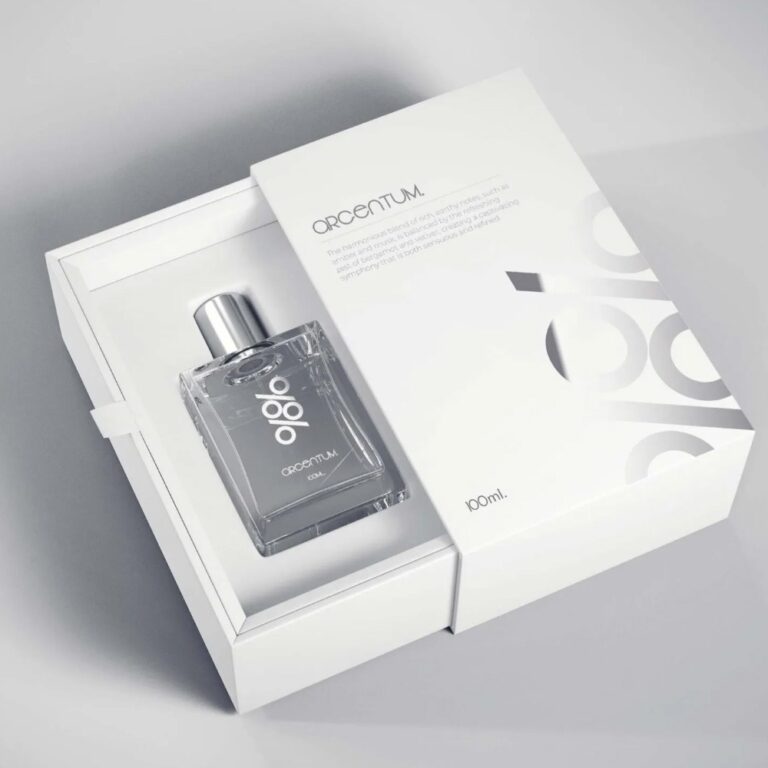
This is why I consider the modern drawer box one of the most underrated rigid box packaging ideas in premium packaging. For jewelry and small luxury goods, rigid box packaging ideas built around controlled reveals can often deliver a better experience than adding another decorative finish to a standard lid-and-base box.
The design variables include:
board caliper;
wrap thickness;
tray-to-sleeve clearance;
pull-tab position;
insert height;
product center of gravity;
humidity-related dimensional changes;
direction of paper grain;
glue consistency.
That is why “make it tighter” is not a useful production specification.
A better instruction defines the actual dimensional tolerance and expected sliding performance.
For high-volume programs, buyers should test the drawer using real production materials, not only handmade sample-room components.
The Sample Looked Perfect. The Production Order Didn’t.
This is where packaging development can go wrong very quickly.
Recently, I came across a manufacturing discussion where a buyer posted photos comparing an approved packaging sample with boxes from the actual production run. The production material looked noticeably thinner than the sample.
The supplier said both used the same E-flute specification, but explained that the bulk-production material had gone through lamination and die-cutting machinery, where pressure changed its final appearance and thickness.
The discussion was about corrugated packaging rather than rigid gift boxes, but the lesson transfers almost perfectly.
The buyer had approved what the sample looked like.
The missing question was what measurable properties of that sample would become the production standard.
I see exactly the same vulnerability in rigid boxes.
Imagine approving a beautiful magnetic book-style prototype. It sits perfectly on the meeting-room table. The lid snaps shut. The corners are clean. The perfume bottle fits.
Then 20,000 units are produced.
Suddenly:
the greyboard feels slightly lighter;
one magnet sits 2 mm off position;
the hinge is stiffer;
the insert cavity grips the bottle;
wrapped corners show inconsistent tension;
foil registration drifts;
dark paper scuffs during packing;
lids sit fractionally proud on part of the run.
None of those problems requires a dramatic manufacturing failure. Small variations stack up.
That is why I tell buyers not to approve revolutionary packaging with their eyes alone.
Approve the engineering behind it.
The approved golden sample should be converted into measurable specifications covering materials, dimensions, tolerances, wrapping, inserts, print, finishing, closure performance, acceptable defects, and inspection criteria.
A prototype is a reference.
A specification is a production control system.
4. Simplified Magnetic Book Boxes: Keep the Reveal, Remove the Excess
Magnetic book-style boxes became popular for a reason.
They work.
You get a large branding surface, an intuitive opening sequence, good product presentation, and a satisfying closure.
But the format has also been overused.
A typical luxury brief can quickly become:
“Make the board thicker. Add four magnets. Put EVA inside. Add ribbon. Add foil. Add embossing. Add another printed panel inside the lid.”
At some point, nothing is actually improving.
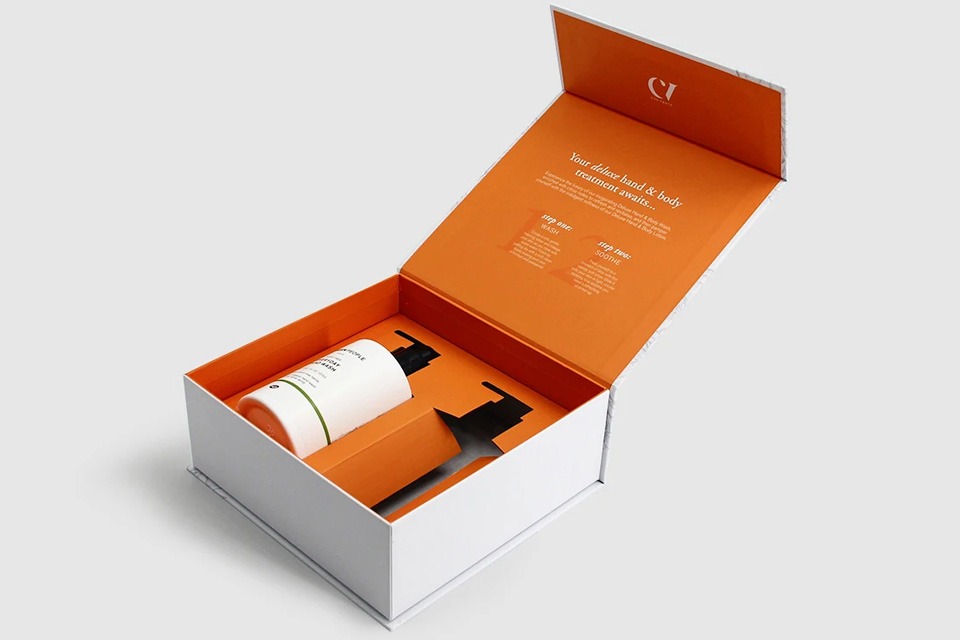
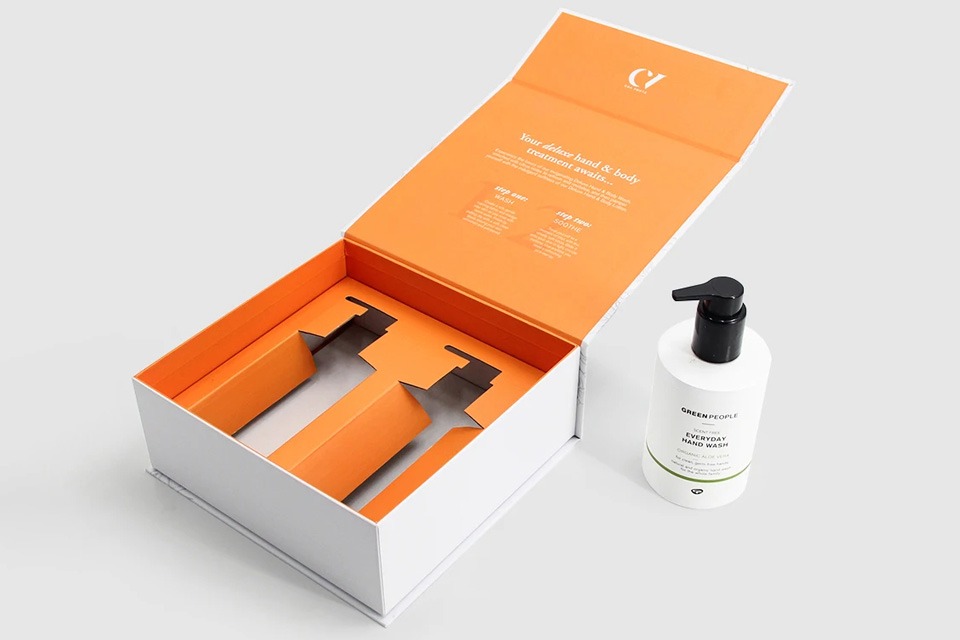
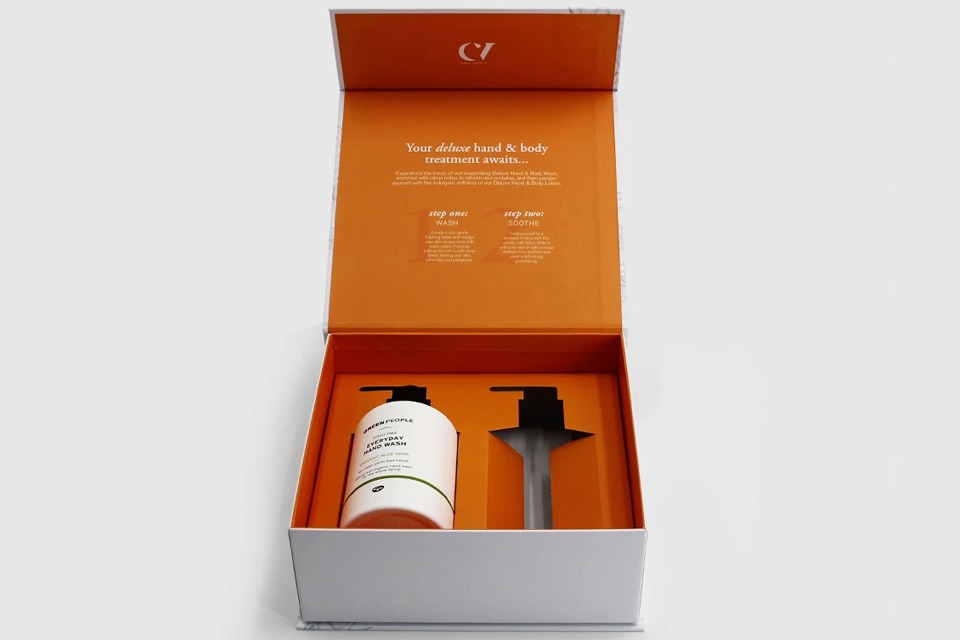
For fragrance products, a carefully engineered custom rigid box packaging program can retain the book-style experience while reducing unnecessary weight, excessive cavity space, and decorative layers. The result may use fewer magnets, a more efficient bottle insert, narrower walls, and a cleaner interior rather than simply adding another premium process.
This is where I disagree with a lot of luxury packaging briefs.
Adding more luxury features does not automatically make a box more luxurious.
Sometimes it makes the box worse.
Every magnet, ribbon, foam layer, shoulder, metal accessory, and decorative panel creates another manufacturing step. Another tolerance. Another assembly point. Another place something can go wrong.
And another cost.
I would take a perfectly proportioned shoulder-neck box or an exceptionally smooth drawer box over an oversized magnetic box carrying six decorative processes almost every time.
Premium packaging should feel resolved.
Not crowded.
What to engineer instead of adding decoration
Focus on:
lid opening angle;
closure force;
hinge flexibility;
magnet polarity and position;
bottle or product removal force;
wall alignment;
reveal width;
opening sequence;
sound and tactile feedback.
Customers may not consciously describe these details.
They still feel them.
5. Double-Door Rigid Boxes: Creating Theater Without a Giant Box
There is still a place for packaging theater.
The trick is creating it structurally.
A double-door rigid box opens from the center, exposing the product in stages. Used badly, it becomes bulky and gimmicky.
Used well, it creates a strong reveal without requiring extreme box depth.
That makes it useful for gift sets, fragrance collections, cosmetics kits, spirits, commemorative products, promotional launches, and high-value accessories.
The key is hierarchy.
When the doors open, what does the customer see first?
The product?
A brand message?
Two secondary products framing the hero item?
An accessory compartment?
Good structure directs the eye. Bad structure merely exposes a complicated interior.
This is also where luxury packaging design has to work closely with packing-line reality. A beautiful two-door configuration can become painfully slow if operators need to place multiple components manually, straighten ribbons, align products in several cavities, and close two doors independently.
A buyer evaluating this structure should therefore ask about packing time per unit, not just the unit price of the empty box.
That number can change the economics of the entire project.
6. Collapsible and Modular Rigid Boxes: The Logistics Problem Finally Gets Attention
Traditional rigid boxes have one major commercial weakness.
They ship air.
An assembled rigid box occupies nearly the same volume whether it contains a product or nothing at all.
For domestic programs, that may be manageable.
For international sourcing, it can become painful.
A collapsible rigid box changes the equation by allowing the structure to travel flat or partially flat before final assembly. Modern versions can use concealed adhesive strips, locking corners, engineered panels, or magnetic arrangements that create an assembled appearance much closer to a conventional setup box.
This is not the right answer for every product.
But for larger gift boxes, seasonal programs, promotional kits, apparel, and e-commerce-heavy brands, freight savings can become significant enough to justify more sophisticated structural engineering.
Then there is modularity.
Instead of producing a completely new box whenever the product configuration changes, brands can develop a standardized outer rigid box with replaceable paperboard trays or product-specific inserts.
One outer footprint.
Multiple SKUs.
That is particularly useful when developing sustainable luxury packaging for small bottles, wellness products, gift sets, or related product families where the primary pack changes more frequently than the brand identity.
The operational benefits can include:
fewer outer-box tooling changes;
consolidated purchasing volumes;
reduced inventory complexity;
easier seasonal updates;
lower obsolete-packaging risk;
replacement of inserts without redesigning the whole presentation box.
This is the kind of innovation procurement teams tend to appreciate because it can affect more than aesthetics.
It can simplify the SKU architecture.
What Does “Sustainable Luxury” Actually Mean for a Rigid Box?
It should not mean putting a recycling symbol on a complicated package.
And it should not mean replacing every material with kraft paper and assuming the job is finished.
A more useful definition is:
Sustainable luxury packaging creates the required product protection and premium experience with fewer unnecessary materials, easier material separation, efficient dimensions, and a realistic end-of-life route.
McKinsey’s global survey supports the emphasis on circularity. Recyclability ranked as consumers’ leading sustainability characteristic across all 11 countries studied, while recycled content and reusability also performed strongly.
For rigid boxes, that can translate into practical design decisions:
replace plastic trays with engineered paperboard where performance permits;
make inserts removable;
avoid unnecessary permanent lamination;
reduce decorative plastic components;
use fiber-based structures where technically appropriate;
reduce cavity volume;
right-size the box around the actual product;
design boxes that customers have a realistic reason to reuse;
provide clear material-separation instructions when multiple materials remain necessary.
Notice what is missing from that list.
“Make it brown.”
Luxury does not have to look rustic to use fewer materials.
PPWR Changes the Conversation About Oversized Luxury Boxes
For European brands, structural optimization deserves particular attention.
The EU’s PPWR generally became applicable on 12 August 2026 and establishes packaging requirements covering manufacturing, composition, recyclability, and waste prevention.
Article 24 specifies that economic operators filling grouped, transport, or e-commerce packaging must ultimately keep the empty-space ratio at 50% or below, subject to the timetable and calculation methodology established by the Regulation.
Sales packaging follows a different rule. By 12 February 2028, empty space must be reduced to the minimum necessary for packaging functionality, including product protection. Filling materials such as paper cuttings, air cushions, bubble wrap, sponge fillers, foam fillers, wood wool, and polystyrene are treated as empty space for this assessment.
There is another point luxury brands should pay attention to.
European Commission guidance cites Article 10(2), which addresses packaging features intended only to increase the perceived volume of a product, including unnecessary layers, false bottoms, and double walls that do not meet applicable performance criteria.
That does not mean rigid gift boxes are banned.
It means the engineering rationale matters more.
Protection is a rationale.
Product stability is a rationale.
Required clearance for an irregular product may be a rationale.
“Consumers think a bigger box looks expensive” is becoming a much weaker one.
That should influence the next generation of luxury packaging.
Stop Designing Luxury Packaging as a Checklist
Here is the uncomfortable part.
Buyers sometimes ask us to combine thick greyboard, oversized shoulders, EVA foam, ribbons, magnets, foil stamping, embossing, spot UV, special paper, and elaborate opening mechanisms in the same box.
Every individual feature sounds premium.
The finished package may not be.
Luxury packaging is not a shopping list of expensive converting processes.
Every unnecessary component introduces another:
manufacturing tolerance;
assembly operation;
supplier dependency;
QC requirement;
failure point;
material interface;
packing operation;
freight expense;
recycling problem.
Poor insert engineering alone can destroy the perceived value of an expensive package.
If a $150 perfume bottle rattles inside a beautifully foiled presentation box, the foil does not save the experience.
If a drawer sticks, the embossing does not matter.
If double doors do not align, thicker board does not make the box feel more luxurious.
If a customer has to tear bonded foam and fabric from greyboard before figuring out what can be recycled, adding an FSC-certified wrap does not magically simplify the package.
The industry needs a slightly different definition of innovation:
Less decoration. Better engineering.
Fewer materials. Smarter structures.
Smaller boxes. Stronger brand impact.
That is where I believe the next stage of premium rigid packaging is heading.
How Should Buyers Evaluate a New Rigid Gift Box Design?
Do not evaluate it only as a graphic-design object.
Evaluate it as a manufactured system.
Before approving a new structure, procurement teams, packaging engineers, brand managers, and quality teams should review at least four layers.
Structural performance
Check board thickness, compression resistance, opening cycles, lid fit, drawer movement, hinge performance, insert retention, drop protection, and product-removal force.
Production repeatability
Ask which operations are automated and which are manual.
Magnet placement, wrapping, corner forming, insert installation, ribbon attachment, and final assembly may contain manual operations depending on the structure and factory setup.
The more manual positioning involved, the more clearly your tolerances and inspection methods should be defined.
Material architecture
Map every material in the box.
Do you need it?
Can it be removed?
Can two materials be replaced with one?
Could a paperboard insert replace foam?
Can decorative components be separated without destroying the main box?
These are much better questions than simply asking whether a package is “eco-friendly.”
Logistics
Calculate the complete landed packaging cost.
That means looking beyond EXW unit price and considering:
boxes per master carton;
master-carton dimensions;
volumetric weight;
pallet utilization;
container utilization;
packing labor;
assembly labor;
damaged-box replacement rate;
storage volume.
A technically cheaper box can easily become the more expensive packaging system.
A Better Approval Standard for Custom Rigid Boxes
Once a design is selected, lock the production specification.
Do not simply email the supplier and say:
“Production should be the same as approved sample.”
That sentence is not specific enough.
A stronger specification can document:
Specification Area
What to Define
Board
Material grade, thickness, density if required
Dimensions
Internal/external dimensions and tolerances
Wrap
Paper type, GSM, texture, coating, color standard
Printing
Process, ink reference, ΔE tolerance where applicable
Foil/Embossing
Position, registration tolerance, depth/coverage
Inserts
Material, cavity dimensions, retention and removal force
Magnets
Size, strength, polarity and location
Drawer fit
Defined clearance and acceptable sliding resistance
Drop, rub, compression, transit or other project-specific tests
Inspection
Sampling plan and defect classifications
The golden sample still matters.
Just don’t make it your only quality document.
Which Rigid Box Design Should You Choose?
There is no single “best” luxury box.
Match the structure to the commercial problem.
Choose a fiber-first structure when recyclability and simplified material architecture are major priorities.
Choose a shoulder-neck box when you want premium presentation through proportion and a precise reveal.
Choose a drawer box when tactile opening behavior is central to the experience.
Choose a magnetic book-style box when you need a familiar presentation format with a large branding surface—but simplify the construction where possible.
Choose a double-door box when staged presentation actually contributes to the product story.
Choose a collapsible or modular rigid box when freight volume, storage, reuse, or multi-SKU flexibility matter.
The important point is not to chase a structure simply because it looks new.
The best custom rigid box packaging is the one that still performs when design intent collides with production tolerances, distribution, packing labor, sustainability targets, compliance requirements, and real-world budgets.
That is the difference between a concept box and a commercially successful one.
FAQs
What are the biggest luxury packaging trends in 2026?
Luxury packaging is moving toward smarter structures, recyclability, right-sizing, modular inserts, tactile opening experiences, and fewer unnecessary mixed materials.
Brands still want strong visual impact, but material efficiency, manufacturing repeatability, freight costs, and emerging packaging regulations now have more influence over structural decisions.
What is a rigid gift box?
A rigid gift box is a premium paperboard box made from thick, non-folding board that is typically wrapped with printed or decorative paper.
Common formats include lid-and-base, shoulder-neck, drawer, magnetic book-style, double-door, and collapsible rigid boxes.
What makes rigid box packaging feel luxurious?
Precision usually matters more than the number of decorative finishes.
Tight alignment, controlled opening resistance, accurate product fit, clean wrapped edges, tactile materials, balanced proportions, and a deliberate reveal can make a simple structure feel more expensive than an overloaded box with multiple finishes.
Are rigid boxes recyclable?
Some rigid boxes can be recyclable, but recyclability depends on their complete material construction and local recycling infrastructure.
Paper-based boards are only part of the equation. Plastic lamination, foam, magnets, textiles, adhesives, windows, and other bonded components can affect separation and recycling.
How can brands make luxury rigid boxes more sustainable?
Use fewer unnecessary materials, right-size the structure, simplify material combinations, select removable inserts, and design for realistic recycling or reuse.
Paperboard or molded-fiber inserts may replace plastic foam in suitable applications, while modular designs can allow one outer box to serve multiple product configurations.
Does the EU PPWR ban oversized luxury packaging?
No. PPWR does not simply ban large luxury boxes, but it places stronger requirements on packaging minimization, recyclability, and unnecessary empty space.
Sales packaging must reduce empty space to the minimum necessary for functionality by February 12, 2028, while separate limits apply to grouped, transport, and e-commerce packaging.
Should a golden sample be enough to approve mass production?
No. A golden sample should be supported by measurable production specifications and inspection criteria.
Define board, dimensions, tolerances, colors, finishing, insert fit, closure behavior, acceptable defects, and testing requirements so mass-production quality is not based purely on visual comparison.